
Meteorológiai társalgó
Hasznos linkek (és egy infó)
TMAX TIPPVERSENY (2026. június vége) >> Sat24 műholdképek
>> Sat24 Magyarország mozgó műholdkép
>> Magyarországi radarképek archívuma
>>Tippelek az előrejelzési verseny aktuális fordulójában!
>>Rádiószondás felszállások élő követése!
>>Észlelés (közeli villámlás, jégeső, viharos szél, villámárvíz, szupercella, tuba, porördög, tornádó, víztölcsér, viharkár) beküldése a szupercella.hu-nak!
----------
Képek beillesztése esetén kérjük azokat megvágni, reklámok, mobilok fejléce, stb. csak feleslegesen foglalja a helyet és áttekinthetetlenné teszi az oldalt - a vágatlan képek ezért törlésre kerülnek.
Fotózáskor kérjük a mobilt fektetve használni, egy keskeny de magas kép egyrészt szintén sok helyet foglal, másrészt a kép sem túl élvezetes.
Köszönjük az együttműködést és a megértést.

Link
Link
Nagyon röviden: az átlagnál melegebb északi sarkvidéki tengerek következtében erősebb lehet a szárazföldek lehűlése télen, főleg a nagyobb mennyiségű hó és jég miatt. De itt azért van egy rahedli összefüggés még közben, nem ilyen egyszerű.
Ha guglizol a teljes kiírásra (Warm Arctic, Cold Continents) akkor jó sok mindent lehet róla olvasni.
Pl: "e winter of 2012/2013 continued
a string of severe winters across the
Northern Hemisphere continents. While
coupled models predict that warming
due to anthropogenic forcing would be
greatest in the boreal winter season, over
the past two to three decades, the warm-
ing trend has been muted in the winter
season over some Northern Hemisphere
land areas, while warming has continued
in the other three seasons (Cohen etal.,
2012b). Cohen etal. (2012a) proposed
that sea ice loss has contributed to moist-
ening of the Arctic, which has resulted
in more extensive snow cover in the fall
that in turn forced a dynamical response
in the atmosphere favorable to a negative
winter AO. e enhanced snow accumu-
lation is also consistent with the idea that
low sea ice and warm temperatures lead
to enhanced snow accumulation and ice
age inception"
Link
Nagyon röviden: az átlagnál melegebb északi sarkvidéki tengerek következtében erősebb lehet a szárazföldek lehűlése télen, főleg a nagyobb mennyiségű hó és jég miatt. De itt azért van egy rahedli összefüggés még közben, nem ilyen egyszerű.
Ha guglizol a teljes kiírásra (Warm Arctic, Cold Continents) akkor jó sok mindent lehet róla olvasni.
Pl: "e winter of 2012/2013 continued
a string of severe winters across the
Northern Hemisphere continents. While
coupled models predict that warming
due to anthropogenic forcing would be
greatest in the boreal winter season, over
the past two to three decades, the warm-
ing trend has been muted in the winter
season over some Northern Hemisphere
land areas, while warming has continued
in the other three seasons (Cohen etal.,
2012b). Cohen etal. (2012a) proposed
that sea ice loss has contributed to moist-
ening of the Arctic, which has resulted
in more extensive snow cover in the fall
that in turn forced a dynamical response
in the atmosphere favorable to a negative
winter AO. e enhanced snow accumu-
lation is also consistent with the idea that
low sea ice and warm temperatures lead
to enhanced snow accumulation and ice
age inception"
Utolsó észlelés
Térképek
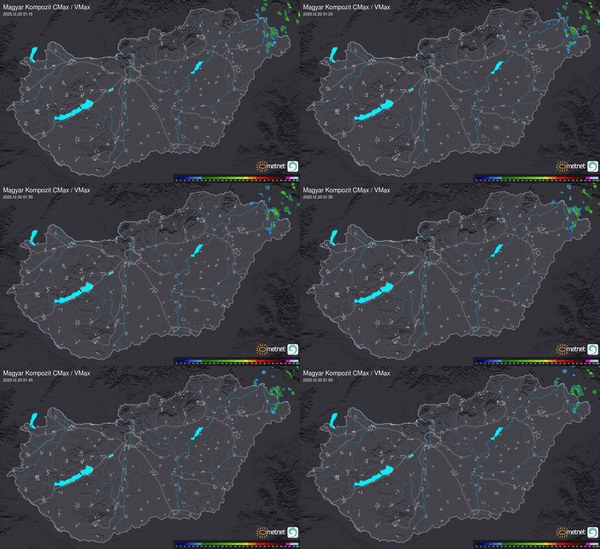
Radar
Aktuális hõmérséklet
Aktuális szél
Utolsó kép
Érdekességek | 2026-07-02 11:26
Szabályzat